
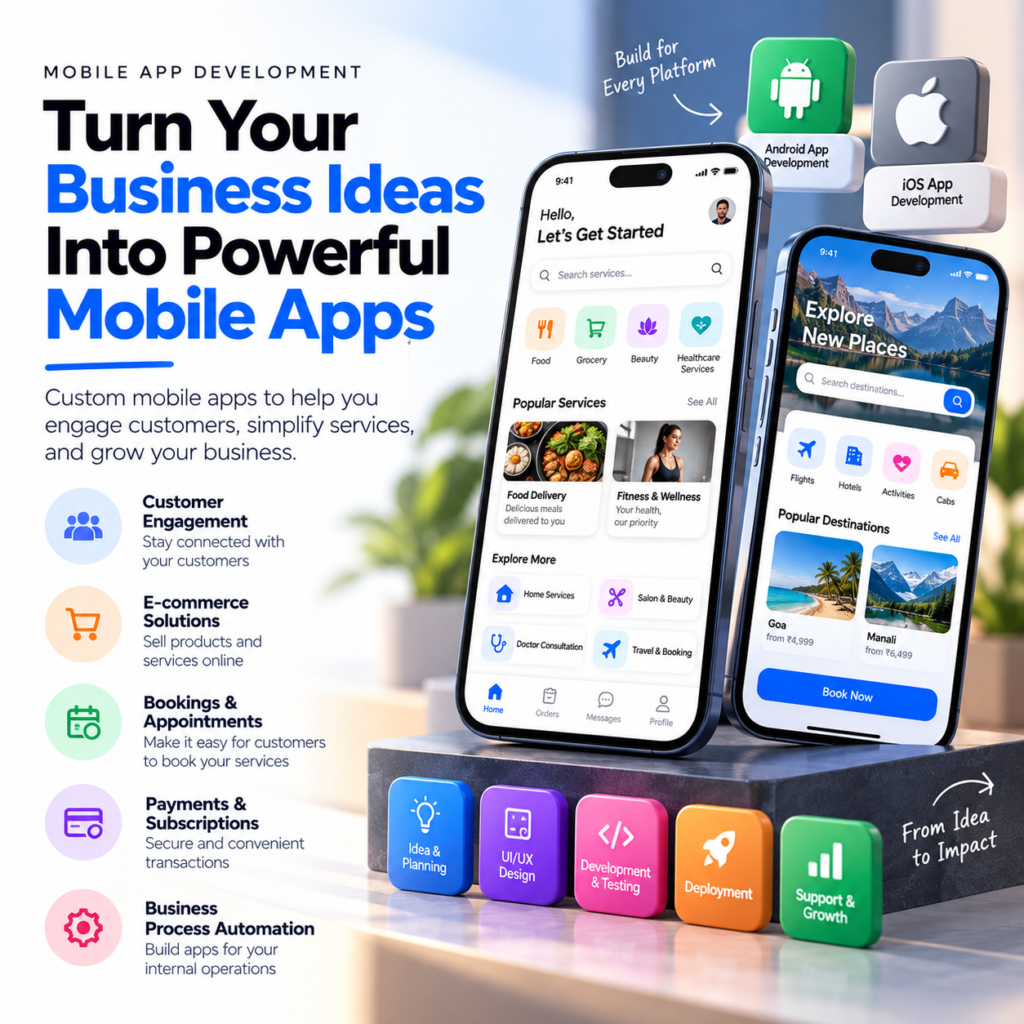
App Development Guide: Android, iOS, Flutter & React Native
App Development: A Complete Guide for Businesses App development involves designing, building, testing and maintaining software applications for mobile devices and other platforms. A successful app requires more than programming. It needs: Clear business objectives User research UI/UX Technical planning Development Testing Security Maintenance What Is App Development? App development is the process of creating software applications for specific user and business requirements. It can include: Mobile applications Business applications Customer applications E-commerce apps Booking apps Productivity applications Mobile App Development Mobile app development focuses primarily on applications used on smartphones and tablets. The process can include: Requirements UX planning UI design Development Testing Deployment Maintenance App Development Company An app development company may provide: Product planning UI/UX Mobile development API integration Testing Deployment Maintenance Android App Development Android applications can be developed for the Android ecosystem. Projects may require consideration of: Device diversity Screen sizes Android versions Performance Permissions Security iOS App Development iOS app development targets Apple’s mobile ecosystem. Important considerations include: Device compatibility UI guidelines Performance Security App Store requirements Flutter App Development Flutter is a framework used for building applications from a shared codebase. It can be considered when businesses want cross-platform development with a consistent development approach. React Native Development React Native is another framework used to develop cross-platform mobile applications. The choice between technologies should depend on: Project requirements Existing technical skills Performance needs Native integrations Development resources Long-term maintenance Cross-Platform App Development Cross-platform development allows teams to build applications targeting multiple platforms using shared development approaches. Potential benefits include: Shared code Faster development for certain projects Consistent functionality However, technical requirements should be evaluated before choosing the approach. Native App Development Native development builds specifically for a platform. Potential advantages include: Platform-specific capabilities Direct access to native APIs Platform-specific performance optimization Custom App Development Custom app development is designed around a specific business problem. Examples include: Booking platforms Customer portals Business management apps Delivery systems E-commerce apps Appointment applications App UI/UX App UI/UX determines how users interact with the application. Important areas include: Navigation Information architecture Buttons Forms Typography Accessibility Feedback Onboarding A technically successful app can still struggle if its user experience is confusing. Business App Development Business applications can help organizations digitize processes. Examples include: Employee management Customer management Sales tools Inventory systems Booking platforms Field-service applications Internal dashboards Choosing an App Development Approach Approach Suitable Consideration Native Platform-specific requirements Flutter Cross-platform development React Native Cross-platform projects using React ecosystem Custom Specialized business functionality There is no single technology that is best for every application. App Development Takeaway Successful app development starts with the business problem and user experience, then selects the appropriate technology and development approach. Explore App Development Services 🡆