Get a Free Quote

Contact Sales

Edit Template

Author name: Devcode Software Solutions Pvt Ltd

Uncategorized

How to Choose the Best Website Development Company in Pune

How to Choose the Best Website Development Company in Pune Your corporate website serves as the digital foundation of your business. It is often the first touchpoint prospective clients interact with when evaluating your services, products, and brand credibility. With numerous web agencies and freelancers operating across Pune—from IT corridors in Hinjewadi to business centers in Baner and Shivajinagar—selecting the right web development partner is critical. In this vendor selection guide, we outline a clear evaluation framework to help you choose a web development agency in Pune that delivers a fast, secure, search-ready website. Critical Evaluation Framework for Selecting Web Agencies 1. Review Live Client Projects, Not Just Static Mockups Evaluate actual live websites developed by the agency on both desktop and mobile devices. Check for fast loading speeds, fluid responsive navigation, clear text hierarchy, and functional contact forms. 2. Confirm Built-in On-Page SEO and Technical Readiness A visually appealing website offers little value if it cannot be indexed by search engines. Ensure the agency incorporates foundational SEO practices during development—including clean code structures, fast page load speeds, XML sitemaps, and Schema markup readiness. 3. Clarify Post-Launch Technical Maintenance Websites require ongoing security patches, plugin updates, and performance monitoring. Confirm whether the agency provides clear post-launch support agreements to keep your site secure and operational long-term. How Much Does Website Development Cost in India? One of the first questions business owners ask when planning a digital presence is: “How much does website development cost in India?” Website pricing in India varies significantly based on project scope, custom design needs, backend functionality, e-commerce features, and ongoing security requirements. Quotes can range from low-cost template setups to custom enterprise platform builds. In this pricing guide, we break down average web development cost tiers in India and explain the key technical factors that influence total project investment. Factors Influencing Web Development Costs Custom Design vs Pre-Made Templates: Custom UI/UX design tailored to your specific brand requires dedicated design iterations, resulting in higher upfront investment than modifying pre-made themes. Content Management & Dynamic Features: Adding dynamic portals, custom booking engines, or complex database integrations increases development hours. On-Page SEO and Technical Optimization: High-performing websites built with clean code architectures, rapid page load optimization, and structured Schema markup require specialized technical execution. Website Development Price Matrix (Estimated Rates) Website Category Key Deliverables & Features Estimated Cost Range (INR)* Startup / Basic Site 5 Pages, Responsive Design, Contact Form ₹15,000 – ₹35,000 Custom Corporate Site 10–20 Custom Pages, Lead Funnels, SEO Setup ₹35,000 – ₹90,000 E-Commerce Online Store Payment Gateway, Product Catalog, Cart System ₹50,000 – ₹180,000 Complex Custom Portal API Integrations, Web App Infrastructure, Custom DB ₹150,000 – ₹500,000+ *Note: Pricing figures represent unverified industry estimates. Final costs depend on your specific project requirements. Build a Scalable Web Presence with Devcode Investing in a professionally developed website builds a reliable digital asset for your business. At Devcode Software Solutions Pvt. Ltd., we provide transparent project pricing and deliver custom web solutions engineered to support real business growth. Want an accurate, transparent quote for your web development project? Contact Devcode Software Solutions Pvt. Ltd. today to discuss your project requirements. Why Does Every Business Need a Professional Website? In today’s digital economy, consumers and business buyers research products and services online before making purchasing decisions. Relying solely on word-of-mouth recommendations or basic social media profiles is no longer enough to support sustained business growth. A dedicated, professionally developed corporate website serves as your 24/7 digital storefront—establishing brand authority, capturing organic search traffic, and converting prospective leads into clients. In this value guide, we outline why having a professional website is essential for modern business success. Key Business Benefits of a Dedicated Website 1. You Own Your Brand Digital Hub Social media networks update their algorithms and platform policies frequently, limiting your organic post reach. A dedicated corporate website represents an asset you own and control completely—giving you full control over design layouts, customer data, and direct lead paths. 2. Captures Active Organic Search Intent When users search Google for specific services—such as “web development services in Pune”—social media profiles rarely secure top organic search positions. A structured, SEO-optimized business website lets you rank for high-intent search terms. 3. Establishes Instant Credibility and E-E-A-T Modern consumers expect legitimate companies to maintain clean, functional websites. Displaying verified client case studies, detailed service descriptions, team profiles, and security certificates builds consumer trust during early buying research. 10 Essential Features Every Business Website Should Have A successful corporate website must do more than look visually appealing. To generate consistent customer inquiries and support business growth, your site must combine fast page load performance, intuitive navigation, mobile responsiveness, and strong conversion features. Omitting key elements—such as clear call-to-actions, SSL security encryption, or structured Schema markup—can degrade user experience and harm your search visibility. Here are the 10 essential features every modern business website should incorporate. 10 Core Business Website Requirements Fully Fluid Mobile Responsiveness  Fast Page Loading Speed (< 2.5 seconds) SSL Security Encryption Clear Call-To-Action (CTA) Placement Intuitive User Experience & Navigation Architecture Social Proof (Verified Reviews & Case Studies)  Comprehensive On-Page SEO & Schema Markup  Accessible Contact & Lead Capture Forms Clear Privacy Policy & Compliance Documentation  Robust Analytics & Conversion Tracking Infrastructure 1. Fully Responsive Mobile Architecture With over 60% of web traffic originating on mobile devices, your site must adapt smoothly across smartphone, tablet, and desktop screens. 2. SSL Security Certificate (HTTPS) SSL encryption secures data transfer between site visitors and your web server, building user trust while satisfying a core search engine ranking requirement. 3. Rapid Page Load Speed Performance Fast loading speeds are essential for user retention. Websites that load within 2.5 seconds achieve lower bounce rates and higher lead conversion rates. 4. Clear Call-to-Action (CTA) Placements Guide site visitors toward conversion with clear, visible buttons (such as “Get a Free Quote,” “Schedule a Consultation,” or “Call Now”). 5. Structured On-Page SEO and Schema Markup Incorporate structured JSON-LD Schema markup and SEO-friendly heading hierarchies
Uncategorized

What Is SEO and How Does It Help Businesses Grow?

What Is SEO and How Does It Help Businesses Grow? In today’s digital world, having a website is only the first step towards building a successful online business. With thousands of businesses competing for customer attention, simply launching a website does not guarantee that people will discover your products or services. Your potential customers need to find you when they search online for solutions that your business provides. This is where Search Engine Optimization (SEO) becomes important. SEO helps businesses improve their visibility in search engine results, attract relevant visitors, build online credibility, and generate potential leads without depending entirely on paid advertising. Whether you operate a small business, startup, e-commerce store, or established company, a well-planned SEO strategy can support sustainable digital growth. But what exactly is SEO, how does it work, and why should businesses invest in it? Let’s explore everything business owners need to know about SEO and its role in long-term business growth. What Is SEO (Search Engine Optimization)? Search Engine Optimization, commonly known as SEO, is the process of improving a website to make it easier for search engines to discover, understand, and present its pages to people searching for relevant information, products, or services. In simple terms, SEO helps your website appear in relevant unpaid search results on platforms such as Google. For example, imagine someone in Pune searches for: Best website development company in Pune Digital marketing services for small businesses Affordable SEO services in Pune Professional e-commerce website development If your business offers these services, SEO can help improve the chances of your website appearing for relevant searches. SEO involves several activities, including: Keyword research and search intent analysis. Website content optimization. Technical SEO improvements. Website structure and internal linking. Image optimization. Quality backlink development. Local search optimization. Performance monitoring and improvements. According to Google’s SEO Starter Guide, SEO helps search engines understand website content and helps users discover relevant pages through search. How Does SEO Work? Search engines use automated systems to discover and organize information available across the internet. Google generally follows three major stages: crawling, indexing, and serving search results. Understanding these stages helps business owners understand why SEO involves more than simply adding keywords to a website. 1. Crawling: Discovering Website Content Crawling is the process through which search engines discover website pages using automated programs called crawlers. These crawlers follow links, explore website structures, and identify new or updated content. For example, when you publish a new service page or blog post, search engine crawlers may discover it through your website’s internal links or sitemap. How businesses can help: Maintain a clear website structure. Create and submit an XML sitemap. Fix broken internal links. Avoid accidentally blocking important pages from crawling. Use descriptive URLs. 2. Indexing: Understanding and Storing Information After discovering a page, search engines analyze its content and other relevant information to determine whether it should be included in their index. During this process, search engines attempt to understand what the page is about and how it relates to other information. For example, a website page explaining website development services should clearly communicate its services, target audience, features, and relevant information. How businesses can help: Publish original and informative content. Use relevant page titles and headings. Organize content into meaningful sections. Add descriptive image alt text. Avoid duplicate or misleading content. How businesses can help: Publish original and informative content. Use relevant page titles and headings. Organize content into meaningful sections. Add descriptive image alt text. Avoid duplicate or misleading content. 3. Ranking and Serving Search Results When someone searches for a particular query, search engines use numerous systems to identify and display relevant results. The order in which pages appear depends on multiple factors, including relevance, content quality, context, and other ranking signals. For example, someone searching for an SEO company in Pune is likely looking for businesses offering SEO services in that location. Your website should clearly communicate your services, expertise, service area, and how customers can contact you. Important: Getting indexed does not guarantee a particular ranking or position. SEO is an ongoing process that requires regular monitoring and improvement. Important: Getting indexed does not guarantee a particular ranking or position. SEO is an ongoing process that requires regular monitoring and improvement. Why Is SEO Important for Business Growth? SEO is not just about improving website rankings. It is about making your business easier to discover when potential customers are actively looking for what you offer. Here are some important ways SEO contributes to business growth. 1. Improves Online Visibility Imagine having a professionally designed website with excellent products and services, but very few people know that it exists. Without proper online visibility, even a good business website may struggle to attract visitors. SEO helps improve your website’s presence in relevant search results, making it easier for potential customers to discover your business. For example, a local interior design company in Pune can create optimized service pages targeting searches related to residential interior design, office interiors, and modular kitchens. When the website provides useful, relevant information, it has a better opportunity to reach people searching for those services. 2. Brings Relevant Organic Website Traffic Organic traffic refers to visitors who reach your website through unpaid search engine results. Unlike paid advertising, organic search traffic does not require paying for every individual click. However, SEO still requires investment in content creation, technical improvements, strategy, and ongoing optimization. The biggest advantage is that your website can continue attracting relevant visitors through useful content and optimized pages over time. For example: A company selling handmade jewellery could create pages and articles covering: Handmade jewellery collections. Traditional jewellery designs. Jewellery care tips. Jewellery buying guides. Custom jewellery options. These pages can help attract visitors at different stages of their buying journey. 3. Generates Quality Business Leads Getting website traffic is useful, but attracting visitors who are genuinely interested in your products or services is even more valuable. SEO helps businesses target relevant keywords based on

Uncategorized

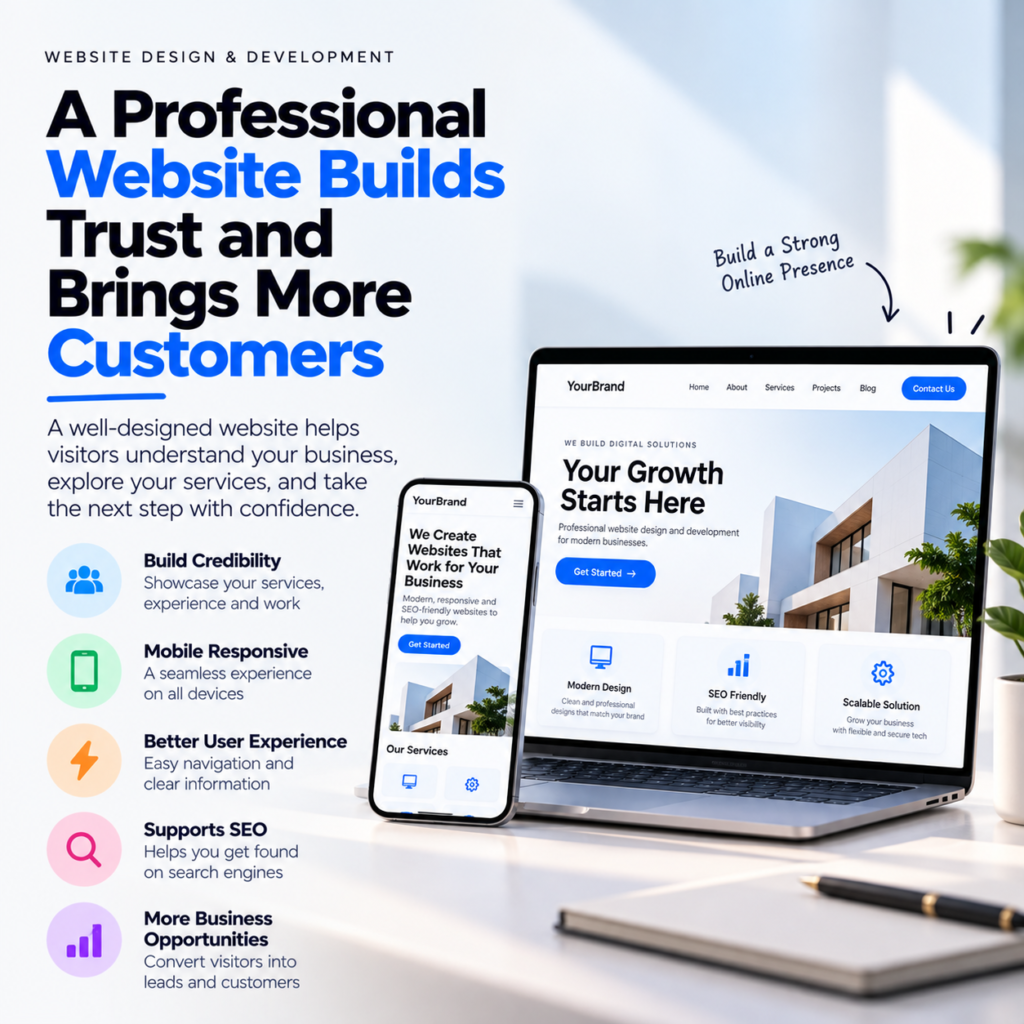
Web Development Guide: Custom Websites, E-commerce & Web Apps

Web Development: A Complete Guide Web development involves creating and maintaining the functional components of websites and web applications. It can range from simple business websites to complex custom web applications. What Is Web Development? Web development can involve: Front-end development Back-end development Databases APIs Authentication Integrations Testing Security Maintenance Website Development Website development transforms design and business requirements into a functioning website. Typical stages include: Requirements Planning Design Development Testing Deployment Maintenance Web Development Company A web development company can help businesses build: Corporate websites E-commerce websites Portals Web applications Custom business systems Custom Web Development Custom development is useful when standard website platforms cannot adequately support project requirements. It may involve: Custom functionality APIs Databases User accounts Dashboards Integrations Custom Website A custom website can be designed around specific branding and business requirements rather than relying entirely on pre-built templates. E-commerce Development E-commerce development can include: Product catalogs Categories Search Cart Checkout Payments Orders Customer accounts Inventory integrations Web Application Development Web applications provide interactive functionality through browsers. Examples include: Customer portals Booking systems Dashboards Management systems SaaS applications Business Website Development A business website should communicate: Company information Services Products Differentiators Contact information Calls to action Website Maintenance Maintenance can include: Updates Backups Security monitoring Content changes Bug fixes Performance checks Website Security Security can include: HTTPS Secure authentication Access controls Software updates Input validation Secure APIs Backups Monitoring Security requirements vary depending on the project. Website Performance Performance optimization can include: Image optimization Code optimization Caching Database optimization Efficient hosting Reducing unnecessary resources Web Development Takeaway Good web development connects technical functionality with business requirements, usability, security and maintainability. Explore Web Development ➦

Uncategorized

Web Design Guide: Responsive, UI/UX, Landing Pages & CRO

Web Design: A Complete Guide for Business Websites Web design combines visual presentation, usability, structure, responsiveness and conversion goals. A business website should not only look attractive. It should make it easy for visitors to understand the business and take the next step. What Is Web Design? Web design covers the planning and visual presentation of website pages. It can include: Layout Typography Colors Images Navigation UI components Responsive behavior User experience Website Design Website design should begin with the user’s needs. Important questions include: What does the visitor need to know? What action should they take? Which information should appear first? How should navigation work? Web Design Company A web design company may help with: Website planning UI design UX Responsive design Landing pages Website redesign Conversion optimization Website Design Services Services may include: Business websites Landing pages E-commerce interfaces Responsive design UI/UX Website redesign Conversion-focused pages Responsive Web Design Responsive design allows layouts to adapt to different screen sizes. A responsive website should work effectively across: Desktop Laptop Tablet Mobile Mobile-Friendly Website Mobile usability is important because many visitors access websites using smartphones. Check: Font size Button size Navigation Image scaling Forms Spacing Page speed UI/UX Design UI means User Interface. UX means User Experience. UI focuses heavily on interface presentation, while UX considers how the complete interaction works. Landing Page Design A landing page typically focuses on one primary conversion objective. A strong landing page can include: Clear headline Supporting message Relevant visual Benefits Features Trust information CTA FAQ Final CTA Conversion-Focused Website A conversion-focused website makes desired actions clear. Potential conversions include: Contact Call Booking Purchase Quote request Demo request Website Redesign A redesign may be appropriate when a website has: Outdated visual design Poor mobile experience Confusing navigation Weak conversion paths Slow performance Difficult content management Website User Experience Good UX reduces unnecessary friction. A visitor should be able to answer quickly: What is this business? What does it offer? Why should I consider it? What should I do next? Website Performance Performance affects usability. Review: Image sizes Scripts Fonts Hosting Caching Page structure Mobile performance Web Design Takeaway Good web design combines aesthetics, usability, responsiveness, performance and business goals. Explore Web Design Services ➦

Uncategorized

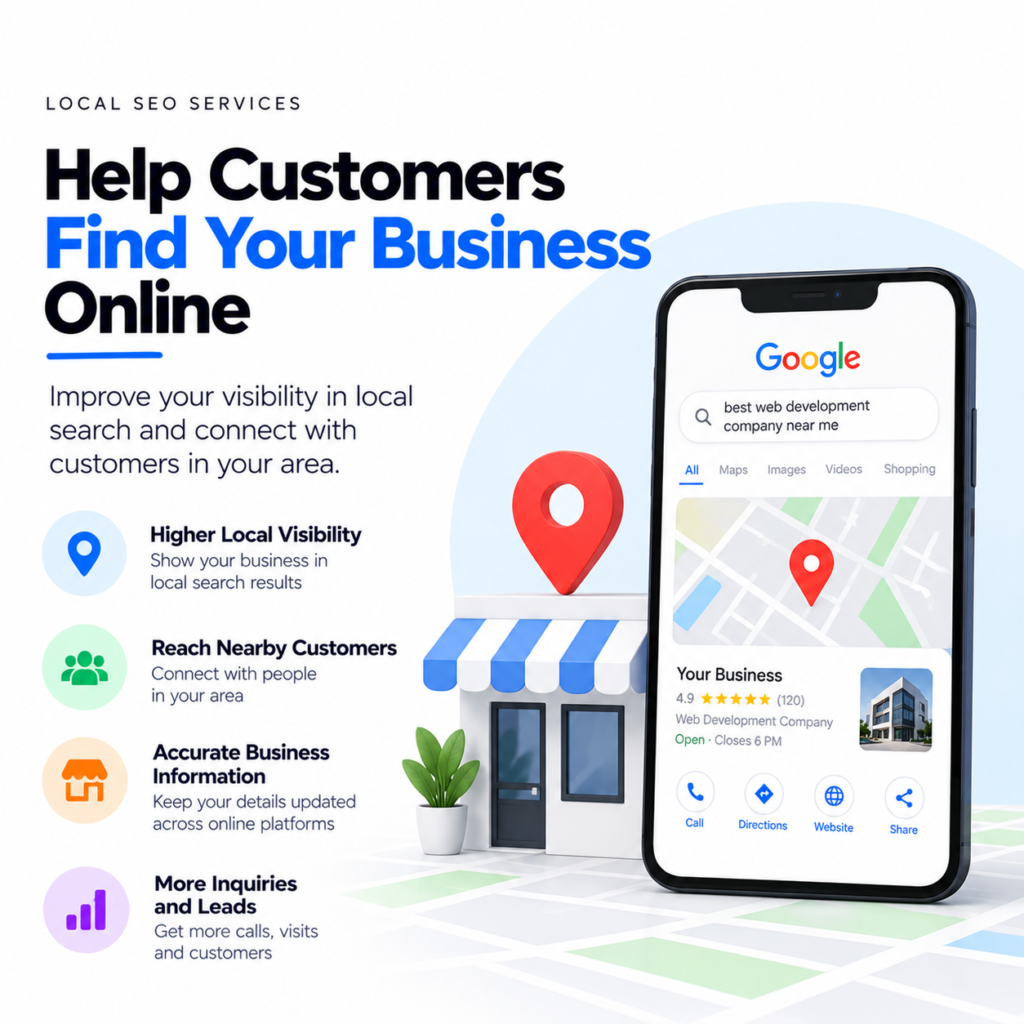
Google Business Profile & Local SEO Guide: Maps, Reviews & Rankings

Google Business Profile and Local SEO: A Complete Guide Local SEO helps businesses become more visible when people search for products and services in specific locations. For eligible businesses, Google Business Profile is an important part of local search visibility. What Is Google Business Profile? Google Business Profile allows eligible businesses to manage information that can appear across Google Search and Maps. Business information may include: Name Address Phone Website Hours Services Photos Reviews Google My Business Google My Business was the previous name for what is now Google Business Profile. Many users still search for “Google My Business,” so businesses may encounter both terms. GBP Creation A GBP setup should accurately represent the real business. Important information includes: Correct business name Accurate category Address or service-area information Phone number Website Business hours GBP Optimization Optimization can include: Complete business information Accurate categories Relevant services Photos Posts where useful Review management Consistent information Google Maps SEO Google Maps SEO focuses on visibility in local map-based searches. Local relevance, business information, prominence and other signals can influence local visibility. Local SEO Local SEO combines: Google Business Profile Website optimization Local content Reviews Citations Local links Location information Local Search Local searches often include location modifiers. Examples: SEO company in Chennai digital marketing agency near me web designer in Mumbai WordPress developer in Pune Google Reviews Reviews can influence customer trust and are an important part of local business presence. Businesses should encourage genuine customer feedback and respond professionally. Google Maps Ranking There is no single guaranteed technique for achieving a particular Maps position. Businesses should focus on accurate information, relevance, customer experience and strong local presence. Near Me SEO “Near me” searches are geographically interpreted. Businesses can support these searches by maintaining accurate local information and providing useful location-relevant website content. Local Business SEO A local SEO strategy can include: GBP Website optimization Service pages Location information Reviews Local citations Local links Local content Multi-Location SEO Businesses with multiple locations need location information that is genuinely useful and distinct. Each location can have: Correct contact details Hours Services Directions Location-specific information Avoid creating thin pages that only replace one city name with another. Local SEO for Small Business Small businesses can start with: GBP setup Accurate contact information Service pages Reviews Local content Local keyword research Website optimization Local SEO Takeaway Local SEO connects online search visibility with physical or service-area business discovery.

Uncategorized

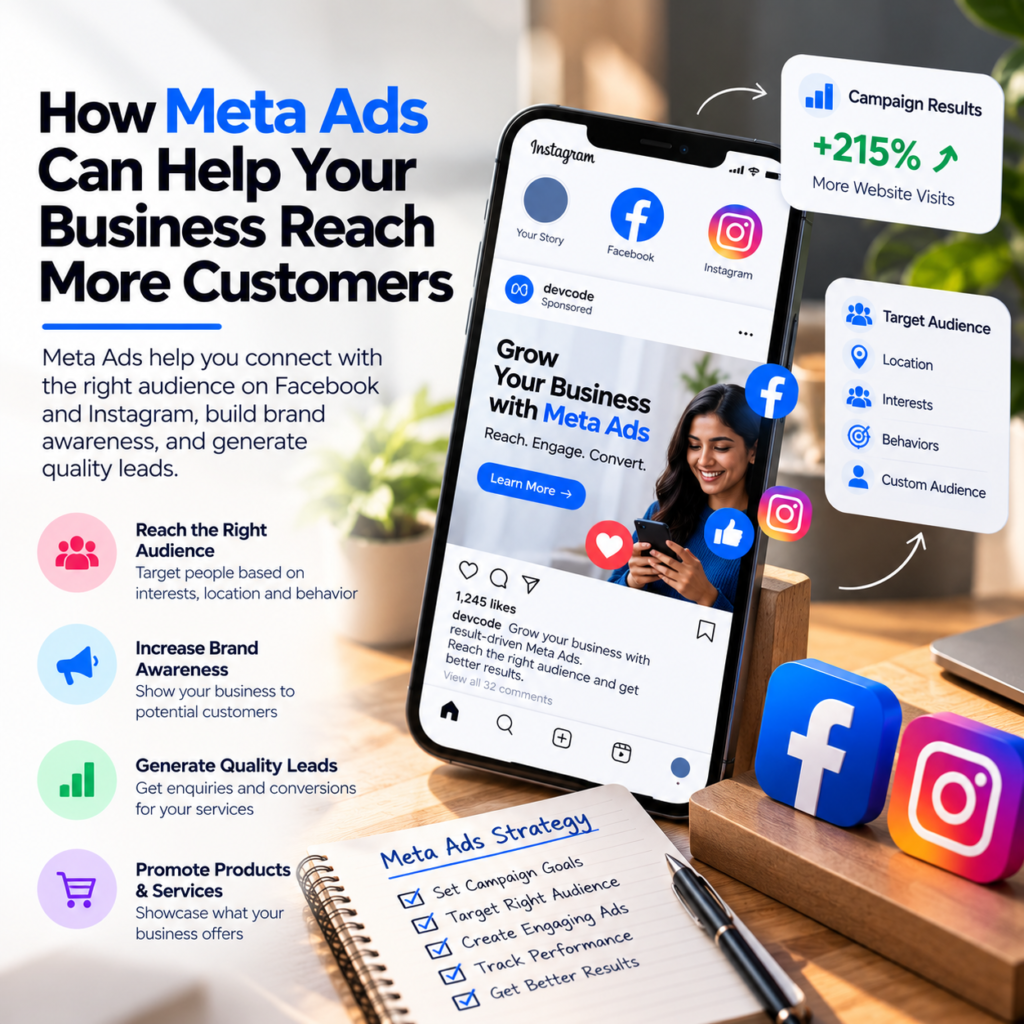
Meta Ads Guide: Facebook, Instagram Ads, Retargeting & Lead Generation

Meta Ads: A Complete Guide Meta Ads can help businesses reach audiences across Facebook, Instagram and related Meta advertising environments. Successful campaigns require more than attractive creatives. They need: Audience strategy Creative testing Campaign objectives Landing pages Conversion tracking Budget management Retargeting What Are Meta Ads? Meta Ads are paid advertisements delivered through Meta’s advertising ecosystem. Meta Ads Agency A Meta Ads agency may help with: Campaign planning Audience research Creative strategy Campaign setup Tracking Optimization Reporting Facebook Ads Facebook advertising can support: Brand awareness Lead generation Website traffic Engagement Sales Instagram Ads Instagram advertising is particularly useful for visual products, brands and audience engagement. Formats can include: Image ads Video ads Stories Reels Carousel formats Facebook Advertising and Instagram Advertising Businesses can use Facebook and Instagram together, while adjusting creative and messaging to the characteristics of each placement. Meta Ads Management Ongoing management includes: Performance monitoring Creative testing Audience analysis Budget adjustments Conversion analysis Meta Ads Cost Meta advertising costs vary according to: Audience Industry Competition Objective Creative Budget Campaign performance There is no fixed cost applicable to every business. Meta Ads Strategy A practical strategy includes: Define the goal. Identify the audience. Develop creative concepts. Build campaigns. Configure tracking. Launch controlled tests. Measure conversions. Improve creative and targeting. Lead Generation Ads Lead-generation campaigns can use forms or landing pages to collect prospect information. Important considerations include: Form length Offer Audience quality Follow-up process Qualification Retargeting Retargeting can help reconnect with people who previously interacted with a business. Potential audiences include: Website visitors Product viewers Previous customers Content viewers Meta Pixel Meta Pixel can help businesses measure relevant website actions and support advertising measurement and audience strategies. Conversion API Conversion API provides another mechanism for sending relevant conversion events to Meta’s systems. Implementation should be configured carefully and consistently with the website’s tracking setup and applicable privacy requirements. Meta Ads vs Google Ads Google Ads often captures existing search intent. Meta Ads can help create and stimulate demand through audience-based advertising. Many businesses can use both depending on their customer journey. Meta Ads for Small Business Small businesses should focus on: One clear objective Defined audience Strong creative Appropriate budget Reliable tracking Fast lead follow-up Meta Ads Takeaway Meta advertising works best when audience, creative, offer, landing experience and measurement are treated as one system.

Uncategorized

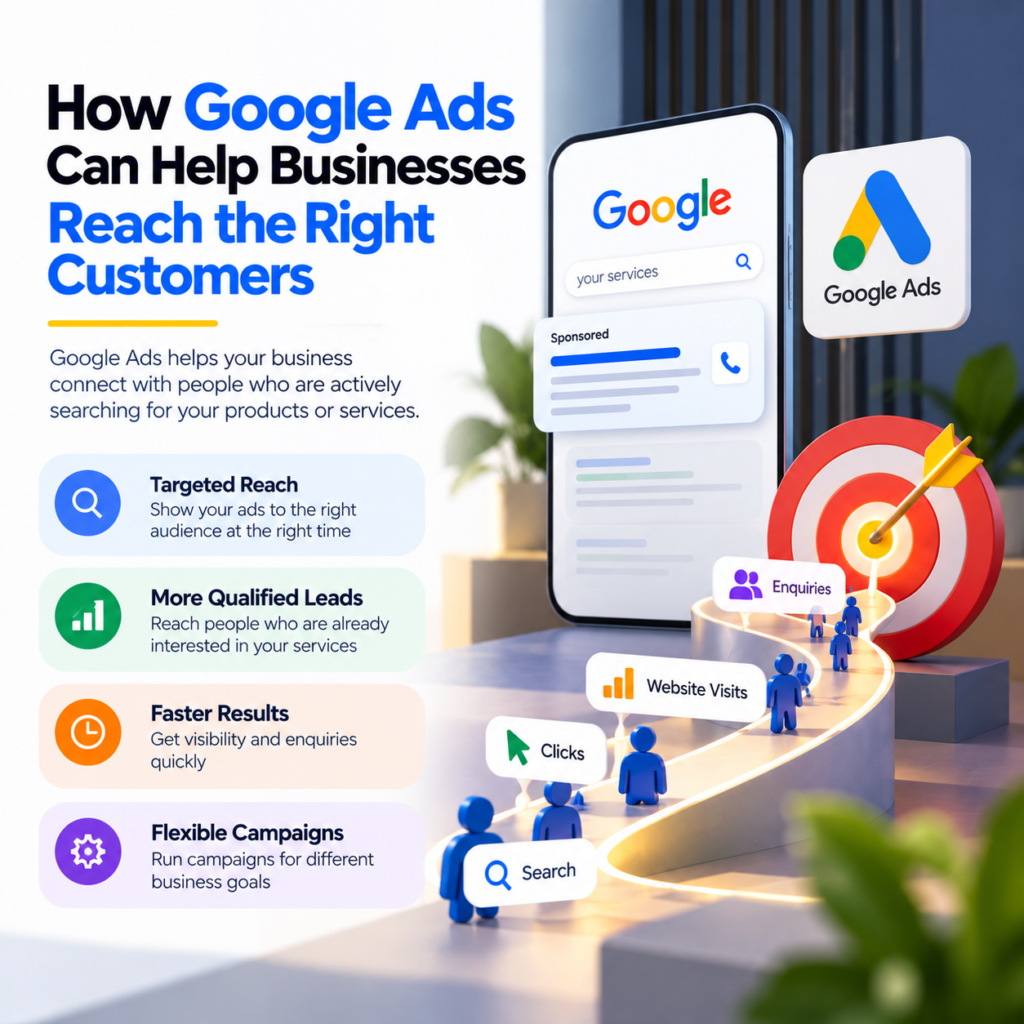
Google Ads Guide: PPC, Search, Display, Shopping & YouTube Ads

Google Ads & PPC: A Complete Guide Google Ads is Google’s advertising platform for reaching users across relevant search and advertising environments. A successful PPC strategy requires more than launching advertisements. It involves: Keyword research Campaign structure Ad messaging Audience targeting Landing pages Conversion tracking Budget management Performance optimization What Are Google Ads? Google Ads allows businesses to advertise products and services to relevant audiences. Campaign types can include: Search Ads Display Ads Shopping Ads YouTube Ads Google Ads Agency A Google Ads agency can manage campaign planning, setup, optimization and reporting. The scope may include: Keyword research Campaign architecture Ad creation Conversion tracking Bid and budget management Landing-page recommendations Reporting Google Ads Management Effective management includes ongoing monitoring rather than setting campaigns once and leaving them unchanged. PPC PPC stands for Pay-Per-Click. In PPC advertising, businesses generally pay when users interact with advertisements according to the applicable advertising model. PPC Agency A PPC agency specializes in paid advertising campaigns and performance optimization. Search Ads Search Ads appear in relevant search environments. They are particularly useful when users already express intent through a search query. Display Ads Display advertising can help businesses reach audiences across visual advertising placements. Common uses include: Awareness Remarketing Product promotion Brand exposure Shopping Ads Shopping campaigns can promote products with information such as product name, image and price. They are particularly relevant for e-commerce businesses. YouTube Ads YouTube advertising uses video to reach audiences. Campaign objectives can include: Awareness Consideration Website traffic Conversions Google Ads Keyword Research Keyword research should consider: Search intent Commercial relevance Match behavior Competition Business value Negative keywords Google Ads Conversion Tracking Conversion tracking helps determine whether campaigns produce meaningful actions. Possible conversions include: Purchases Forms Calls Sign-ups Bookings Without reliable tracking, campaign decisions become harder. Google Ads Cost Google Ads cost varies by: Industry Competition Keywords Location Audience Campaign type Budget Conversion goals There is no single universal Google Ads price. Google Ads Strategy A practical strategy: Define the business objective. Identify the target audience. Research keywords. Create campaign groups. Write relevant ads. Connect appropriate landing pages. Configure conversion tracking. Launch with a controlled budget. Monitor performance. Optimize based on meaningful results. Google Ads for Small Business Small businesses can begin with focused campaigns rather than spreading limited budgets across every campaign type. Common Google Ads Mistakes No conversion tracking Poor keyword relevance Weak landing pages Broad targeting without control Ignoring negative keywords Changing campaigns without enough data Measuring clicks instead of business outcomes Sending all traffic to the homepage Google Ads vs SEO SEO focuses on organic visibility. Google Ads provides paid visibility. They can work together: SEO → Long-term organic acquisition Google Ads → Paid acquisition and testing The appropriate mix depends on business goals. Google Ads Takeaway Successful PPC is a combination of targeting, messaging, landing-page quality, tracking and continuous optimization.

Uncategorized

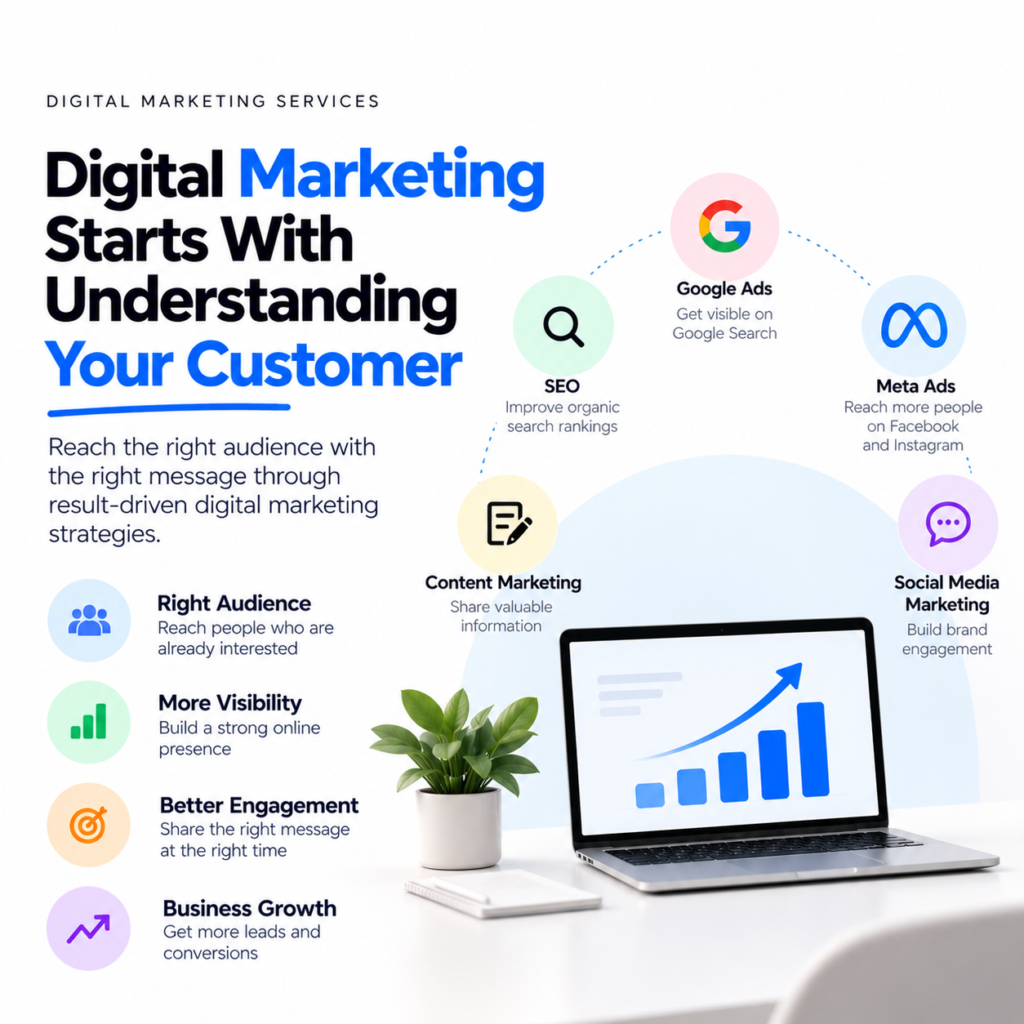
Digital Marketing Guide: Strategy, Services, SEO, Social Media & Leads

A complete digital marketing strategy can combine: SEO Paid advertising Content Social media Email Websites Landing pages Lead generation Conversion optimization Analytics What Is Digital Marketing? Digital marketing is the promotion of products, services or brands through digital channels. It can support: Awareness → Consideration → Conversion → Retention What Does a Digital Marketing Agency Do? A digital marketing agency can help businesses plan, execute and measure online marketing activities. Services may include: Digital marketing strategy SEO Google Ads Meta Ads Content marketing Social media marketing Lead generation Conversion optimization Analytics Digital Marketing Services A complete service portfolio may combine: Service Purpose SEO Organic visibility Google Ads Paid search traffic Meta Ads Social advertising Content Education and discovery Social Media Audience engagement Lead Generation Prospect acquisition CRO Conversion improvement Performance Marketing Performance marketing focuses strongly on measurable actions such as: Leads Sales Sign-ups Calls Purchases App installs Measurement and conversion tracking are important components. Online Marketing Online marketing includes activities performed through internet-based channels. The right combination depends on: Audience Industry Budget Business model Sales cycle Geographic market Content Marketing Content marketing creates useful material to attract and educate audiences. Examples include: Blogs Guides Videos Case studies Infographics Social posts Email content Social Media Marketing Social media marketing can help businesses build awareness, engage audiences and support conversions. Platforms should be selected according to audience and business objectives rather than simply popularity. Lead Generation Lead generation is the process of attracting potential customers and encouraging them to provide contact information or take another meaningful action. Lead-generation assets can include: Landing pages Forms Consultation requests Downloadable resources Lead ads Contact campaigns Marketing Funnel A marketing funnel can be represented as: Awareness → Interest → Consideration → Conversion → Retention Different channels can support different funnel stages. Conversion Optimization Conversion optimization improves the percentage of visitors who complete a desired action. Common areas include: CTA placement Page messaging Forms Trust information Page speed Mobile usability Landing-page design Digital Marketing Strategy A practical strategy starts with: Business goals Target audience Customer problems Competitor research Channel selection Content plan Campaign plan Conversion tracking Measurement Optimization Digital Marketing ROI ROI should connect marketing spending with meaningful business outcomes. Track: Spend Leads Customers Revenue Conversion rate Customer acquisition cost Avoid judging every channel using the same metric. Digital Marketing for Small Business Small businesses can start with a focused strategy rather than trying every channel simultaneously. For example: Local business: GBP + Local SEO + reviews + website + selected paid campaigns. B2B company: SEO + content + LinkedIn/social + landing pages + lead generation. E-commerce: SEO + Shopping Ads + Meta Ads + product content + conversion optimization. Digital Marketing Trends Important areas to monitor include: AI-assisted marketing Generative search Personalization First-party data Video content Conversational marketing Automated workflows Conversion-focused websites Digital Marketing Takeaway Digital marketing works best as an integrated system rather than a collection of disconnected campaigns. Explore Our Digital Marketing Services 🡆

Uncategorized

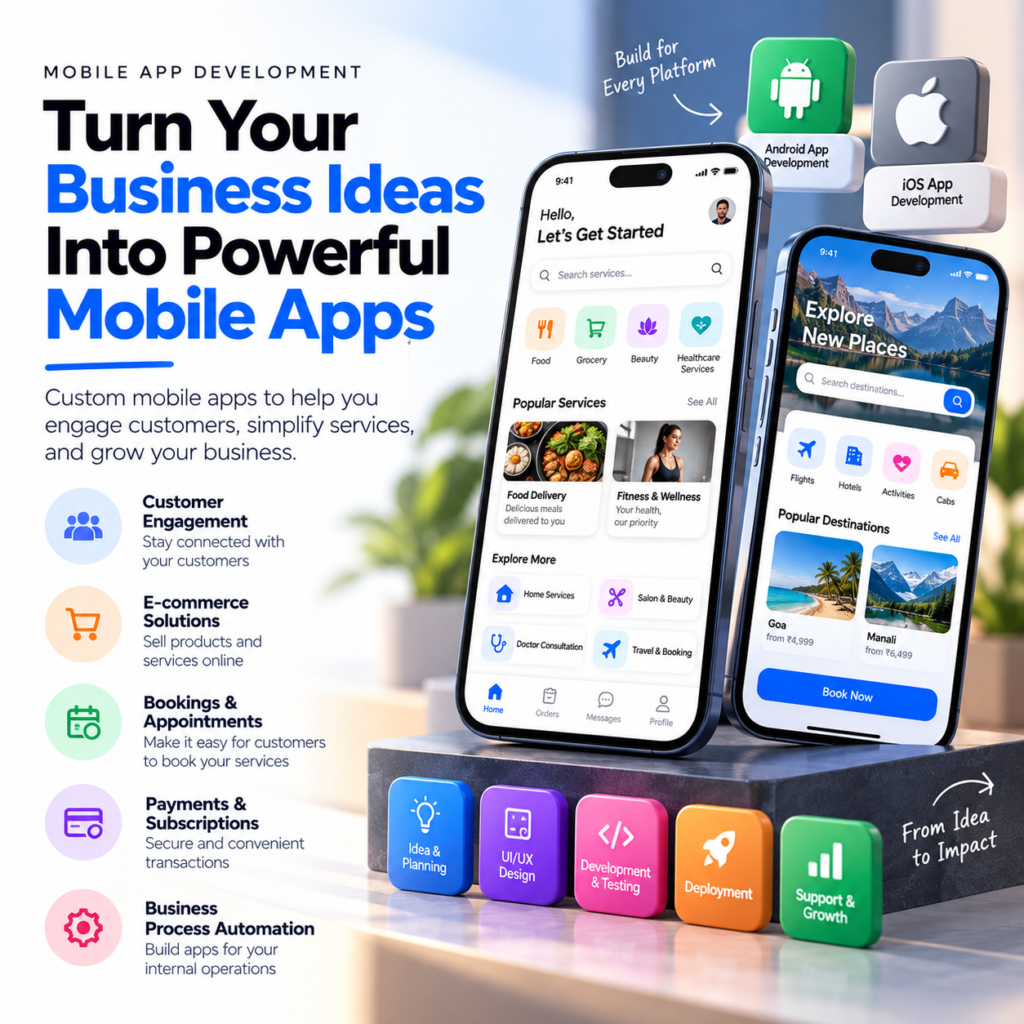
App Development Guide: Android, iOS, Flutter & React Native

App Development: A Complete Guide for Businesses App development involves designing, building, testing and maintaining software applications for mobile devices and other platforms. A successful app requires more than programming. It needs: Clear business objectives User research UI/UX Technical planning Development Testing Security Maintenance What Is App Development? App development is the process of creating software applications for specific user and business requirements. It can include: Mobile applications Business applications Customer applications E-commerce apps Booking apps Productivity applications Mobile App Development Mobile app development focuses primarily on applications used on smartphones and tablets. The process can include: Requirements UX planning UI design Development Testing Deployment Maintenance App Development Company An app development company may provide: Product planning UI/UX Mobile development API integration Testing Deployment Maintenance Android App Development Android applications can be developed for the Android ecosystem. Projects may require consideration of: Device diversity Screen sizes Android versions Performance Permissions Security iOS App Development iOS app development targets Apple’s mobile ecosystem. Important considerations include: Device compatibility UI guidelines Performance Security App Store requirements Flutter App Development Flutter is a framework used for building applications from a shared codebase. It can be considered when businesses want cross-platform development with a consistent development approach. React Native Development React Native is another framework used to develop cross-platform mobile applications. The choice between technologies should depend on: Project requirements Existing technical skills Performance needs Native integrations Development resources Long-term maintenance Cross-Platform App Development Cross-platform development allows teams to build applications targeting multiple platforms using shared development approaches. Potential benefits include: Shared code Faster development for certain projects Consistent functionality However, technical requirements should be evaluated before choosing the approach. Native App Development Native development builds specifically for a platform. Potential advantages include: Platform-specific capabilities Direct access to native APIs Platform-specific performance optimization Custom App Development Custom app development is designed around a specific business problem. Examples include: Booking platforms Customer portals Business management apps Delivery systems E-commerce apps Appointment applications App UI/UX App UI/UX determines how users interact with the application. Important areas include: Navigation Information architecture Buttons Forms Typography Accessibility Feedback Onboarding A technically successful app can still struggle if its user experience is confusing. Business App Development Business applications can help organizations digitize processes. Examples include: Employee management Customer management Sales tools Inventory systems Booking platforms Field-service applications Internal dashboards Choosing an App Development Approach Approach Suitable Consideration Native Platform-specific requirements Flutter Cross-platform development React Native Cross-platform projects using React ecosystem Custom Specialized business functionality There is no single technology that is best for every application. App Development Takeaway Successful app development starts with the business problem and user experience, then selects the appropriate technology and development approach. Explore App Development Services 🡆

Uncategorized

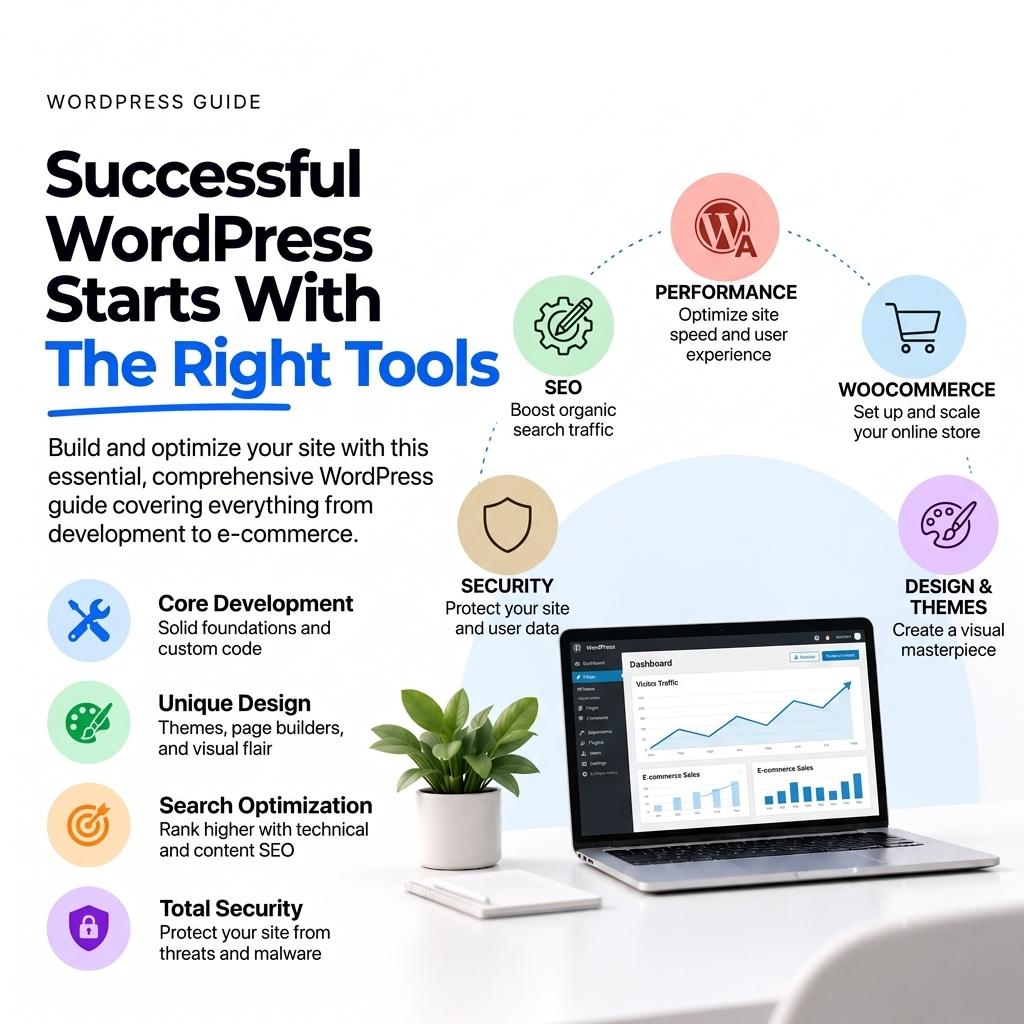
WordPress Guide: Development, Design, SEO, Security & WooCommerce

WordPress: A Complete Guide for Business Websites WordPress is a widely used content management system for building and managing websites. Businesses can use WordPress for: Business websites Blogs Portfolios E-commerce Service websites Landing pages Content platforms WordPress Development WordPress development can include: Theme configuration Custom themes Plugin integration Custom functionality API integration Website customization WordPress Website Design WordPress design combines: Layout Branding Navigation Typography Responsive design UX Conversion elements WordPress Development Company A WordPress development company may provide: Website development Customization Migration Maintenance Security Performance WooCommerce development WordPress SEO WordPress SEO includes: Titles Metadata URLs Content Internal linking Images Performance Technical SEO Structured data WordPress Security Security practices can include: Strong passwords Secure hosting Updates Backups Limited admin access Trusted plugins Security monitoring WordPress Speed Optimization Speed optimization can involve: Image compression Caching Reducing unnecessary plugins Optimizing scripts Better hosting Database optimization CDN configuration where appropriate WordPress Maintenance Regular maintenance can include: Updates Backups Security checks Broken-link checks Performance checks Plugin management Content updates WooCommerce WooCommerce extends WordPress for e-commerce. It can support: Products Categories Shopping carts Checkout Orders Payments Shipping WordPress vs Custom Website WordPress Custom Website CMS-based Custom-built Faster content management Greater custom development flexibility Large ecosystem Custom functionality Many themes/plugins More development control Can reduce development effort May require more development resources The appropriate option depends on project requirements. WordPress vs Shopify WordPress with WooCommerce offers a WordPress-based e-commerce ecosystem. Shopify is a hosted e-commerce platform. Consider: Control Hosting Customization Maintenance E-commerce requirements Budget Technical resources WordPress Takeaway WordPress can be highly flexible, but successful WordPress websites still require good design, development, security, performance, SEO and maintenance. Explore WordPress Services ➦

Scroll to Top

Enquiry Now

Fill out the enquiry form - Let’s Discuss Your Project