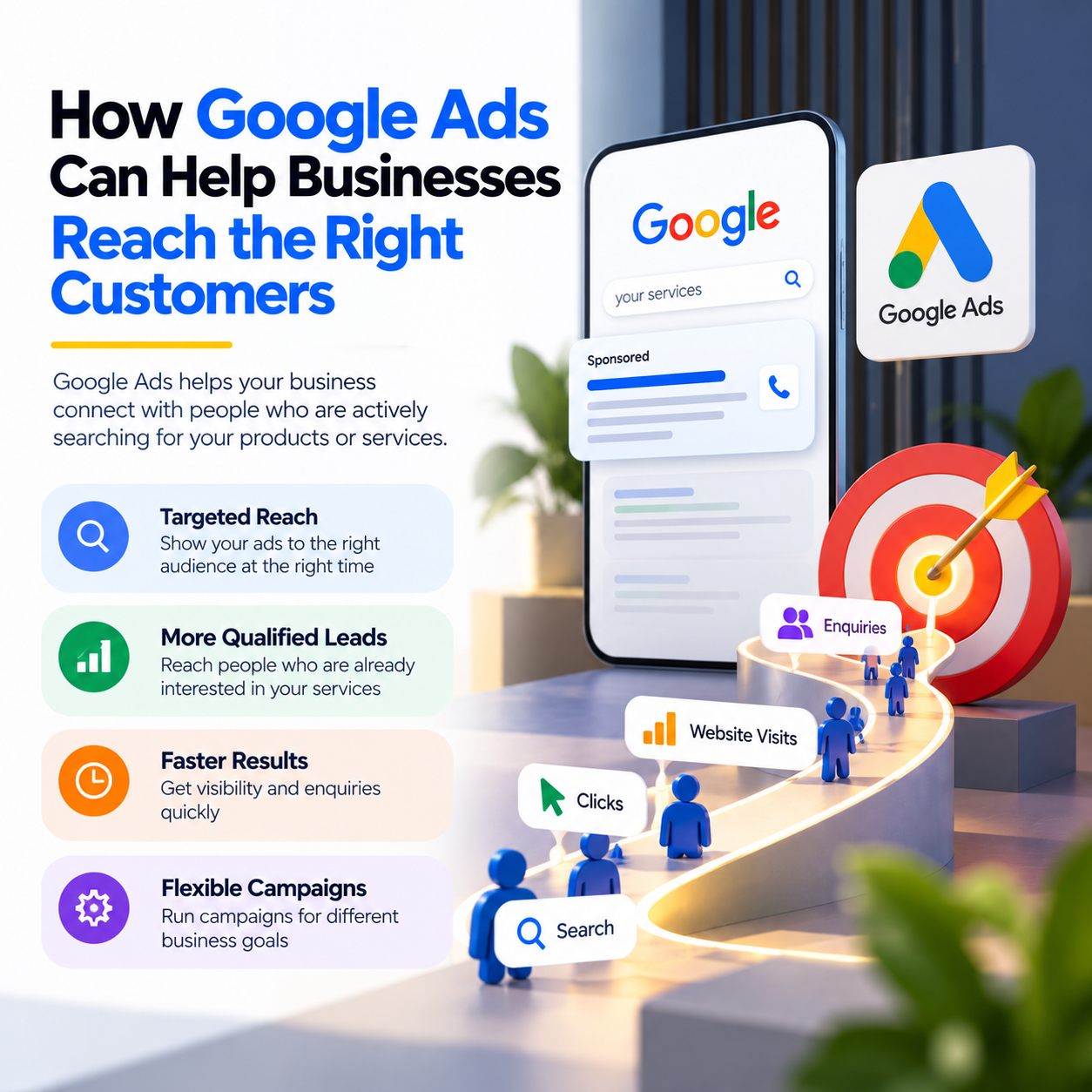
Google Ads & PPC: A Complete Guide
Google Ads is Google’s advertising platform for reaching users across relevant search and advertising environments.
A successful PPC strategy requires more than launching advertisements.
It involves:
- Keyword research
- Campaign structure
- Ad messaging
- Audience targeting
- Landing pages
- Conversion tracking
- Budget management
- Performance optimization
What Are Google Ads?
Google Ads allows businesses to advertise products and services to relevant audiences.
Campaign types can include:
- Search Ads
- Display Ads
- Shopping Ads
- YouTube Ads
Google Ads Agency
A Google Ads agency can manage campaign planning, setup, optimization and reporting.
The scope may include:
- Keyword research
- Campaign architecture
- Ad creation
- Conversion tracking
- Bid and budget management
- Landing-page recommendations
- Reporting
Google Ads Management
Effective management includes ongoing monitoring rather than setting campaigns once and leaving them unchanged.
PPC
PPC stands for Pay-Per-Click.
In PPC advertising, businesses generally pay when users interact with advertisements according to the applicable advertising model.
PPC Agency
A PPC agency specializes in paid advertising campaigns and performance optimization.
Search Ads
Search Ads appear in relevant search environments.
They are particularly useful when users already express intent through a search query.
Display Ads
Display advertising can help businesses reach audiences across visual advertising placements.
Common uses include:
- Awareness
- Remarketing
- Product promotion
- Brand exposure
Shopping Ads
Shopping campaigns can promote products with information such as product name, image and price.
They are particularly relevant for e-commerce businesses.
YouTube Ads
YouTube advertising uses video to reach audiences.
Campaign objectives can include:
- Awareness
- Consideration
- Website traffic
- Conversions
Google Ads Keyword Research
Keyword research should consider:
- Search intent
- Commercial relevance
- Match behavior
- Competition
- Business value
- Negative keywords
Google Ads Conversion Tracking
Conversion tracking helps determine whether campaigns produce meaningful actions.
Possible conversions include:
- Purchases
- Forms
- Calls
- Sign-ups
- Bookings
Without reliable tracking, campaign decisions become harder.
Google Ads Cost
Google Ads cost varies by:
- Industry
- Competition
- Keywords
- Location
- Audience
- Campaign type
- Budget
- Conversion goals
There is no single universal Google Ads price.
Google Ads Strategy
A practical strategy:
- Define the business objective.
- Identify the target audience.
- Research keywords.
- Create campaign groups.
- Write relevant ads.
- Connect appropriate landing pages.
- Configure conversion tracking.
- Launch with a controlled budget.
- Monitor performance.
- Optimize based on meaningful results.
Google Ads for Small Business
Small businesses can begin with focused campaigns rather than spreading limited budgets across every campaign type.
Common Google Ads Mistakes
- No conversion tracking
- Poor keyword relevance
- Weak landing pages
- Broad targeting without control
- Ignoring negative keywords
- Changing campaigns without enough data
- Measuring clicks instead of business outcomes
- Sending all traffic to the homepage
Google Ads vs SEO
SEO focuses on organic visibility.
Google Ads provides paid visibility.
They can work together:
SEO → Long-term organic acquisition
Google Ads → Paid acquisition and testing
The appropriate mix depends on business goals.
Google Ads Takeaway
Successful PPC is a combination of targeting, messaging, landing-page quality, tracking and continuous optimization.